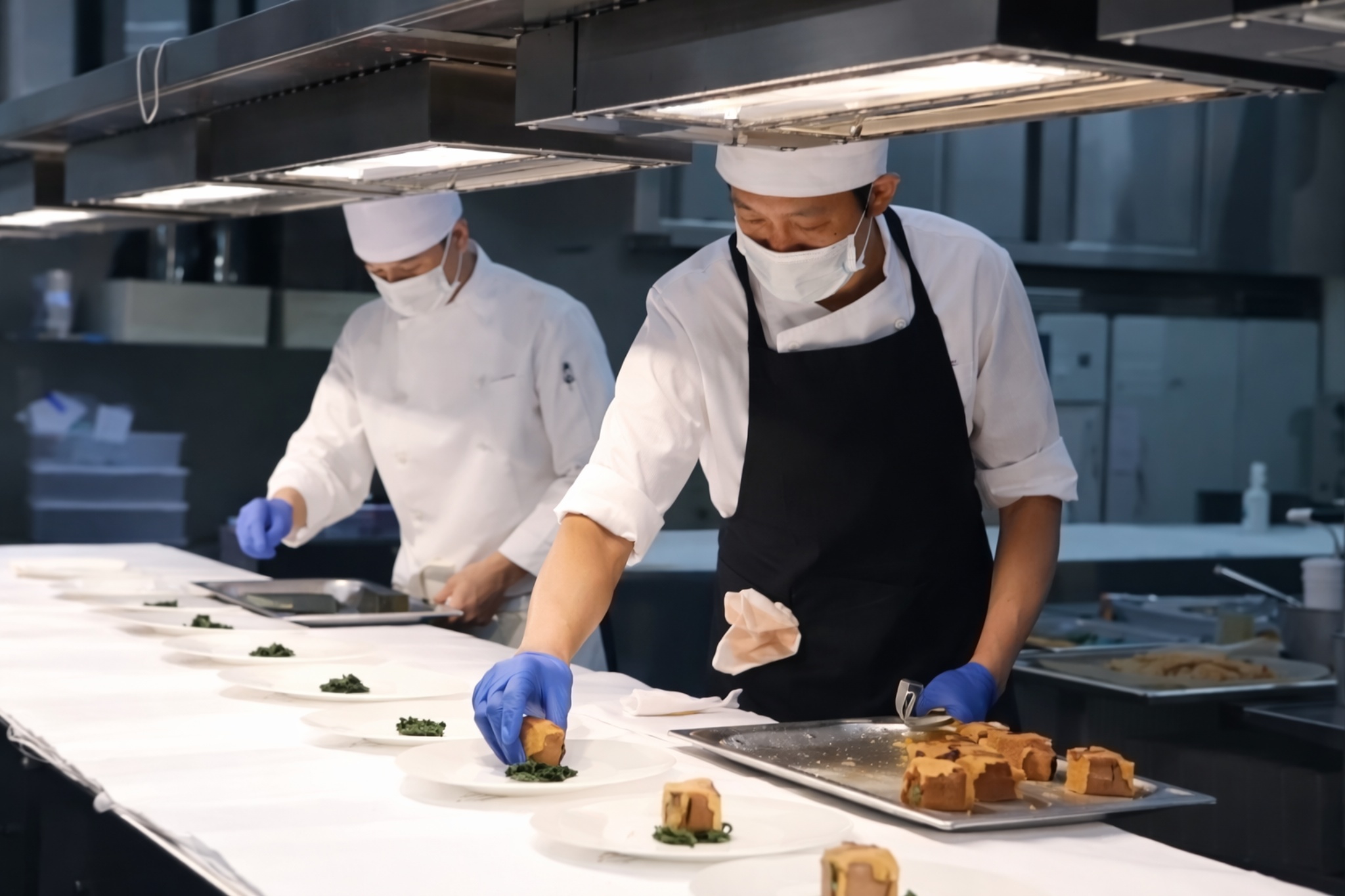
FUSION
One thawing technology. Different scales to bring it into the operation.
Fusion is structured in different configurations to respond with precision to very different operational contexts. From HORECA environments to high-volume industrial processes, its technological logic remains the same: thawing with speed, uniformity, and control, while preserving the product's value and the efficiency of the process far more effectively.
Not every operation requires the same scale, but each one may demand the same precision when thawing.
That is why the Fusion range is organized into solutions that make it possible to bring this technology into very different realities without losing coherence in performance.
How Fusion Works
Fusion uses low-temperature dry steam and latent heat of condensation to perform extraordinarily fast, uniform, and controlled thawing. Thawing correctly does not simply mean applying heat; it means breaking the solid state of ice without creating aggressive thermal gradients, cooking edges, damaging cell membranes, or causing unnecessary water loss. Compared with methods such as water, hot air, or microwaves, Fusion makes it possible to transfer energy in a massive, homogeneous, and controlled way, protecting the product's structure throughout the entire process.
During the phase change, energy is concentrated on the melting of ice while the refrigeration system limits the product's temperature. This combination of heat and cold makes it possible to move toward the point of use with greater control, reducing risks of overheating, surface deterioration, unnecessary water loss, and effects on the food's natural behavior.
Low-temperature dry steam
Fusion works with dry steam and high-temperature air while maintaining 100% relative humidity. The steam transfers energy smoothly and uniformly, condenses where the product requires heat to change phase, and helps avoid hot spots, overheating, dehydration, and loss of juiciness.
Latent heat of condensation
The energy of the process comes from the latent heat of condensation. When it condenses, steam releases a very high amount of energy, approximately 539 kcal per kg, at a controlled temperature. This allows for much faster and more consistent thawing without resorting to aggressive methods that compromise texture, color, flavor, or yield.
Process regulated by stages and subsequent refrigeration
Fusion operates through clearly defined stages: melting impulse, thermal equalization, and optional subsequent refrigeration. Energy transfer occurs progressively, from the outside toward the core, reducing thermal shocks and favoring more homogeneous thawing. Once the process ends, the equipment can switch to refrigeration mode to keep the product in safe conditions until use or later scheduling.
Available
Equipment
Fusion's architecture is built around two main implementation lines: one designed for HORECA operations and another created for higher-volume industrial processes. Both share the same low-temperature dry steam thawing logic, but respond to different scales, rhythms, and needs.
HORECA Environments
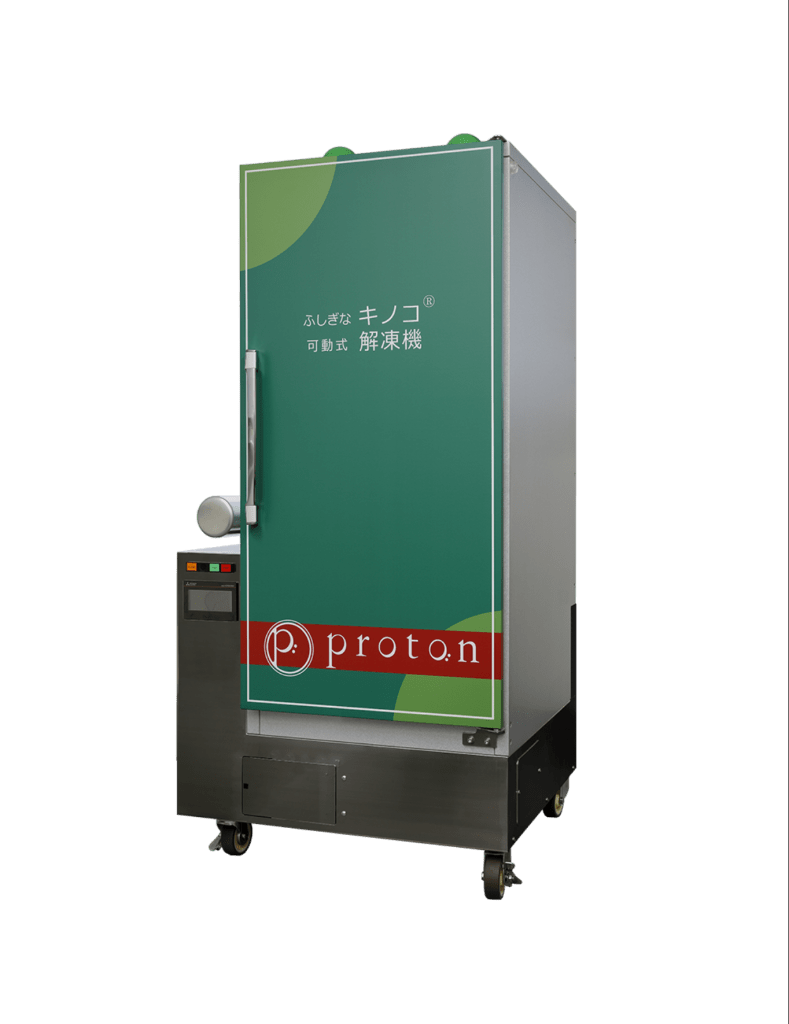
KAITO
The most compact model in the range, designed for HORECA operations that need speed and flexibility in reduced spaces.
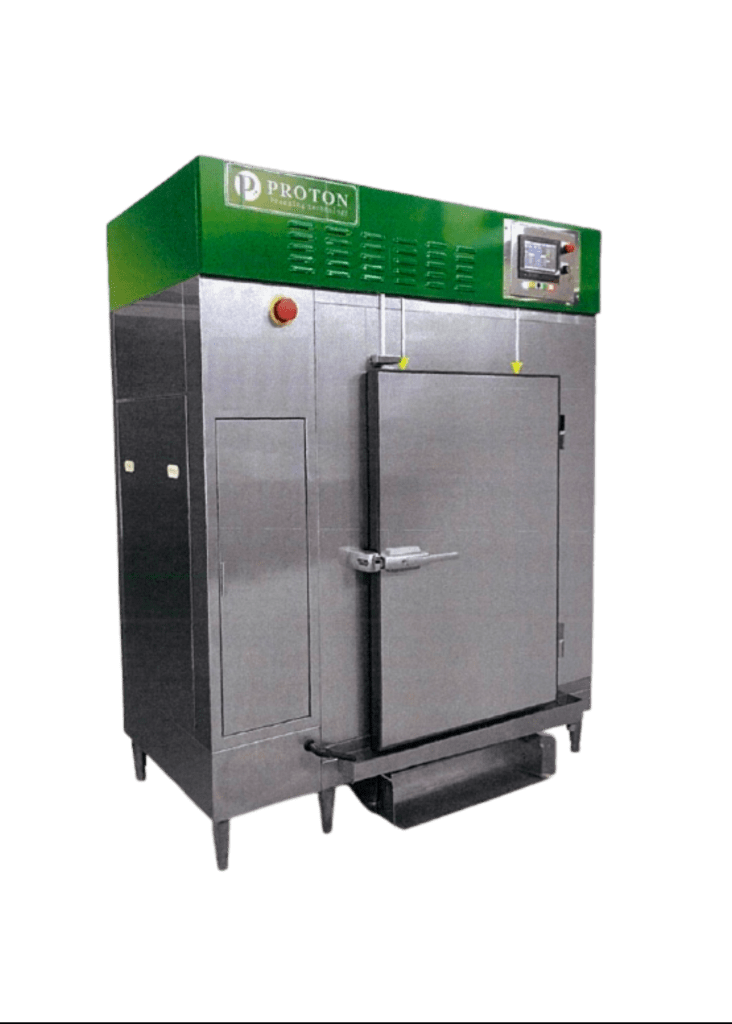
BF-100
Designed for the HORECA channel and for producers seeking to thaw limited volumes quickly.
Industrial Operation
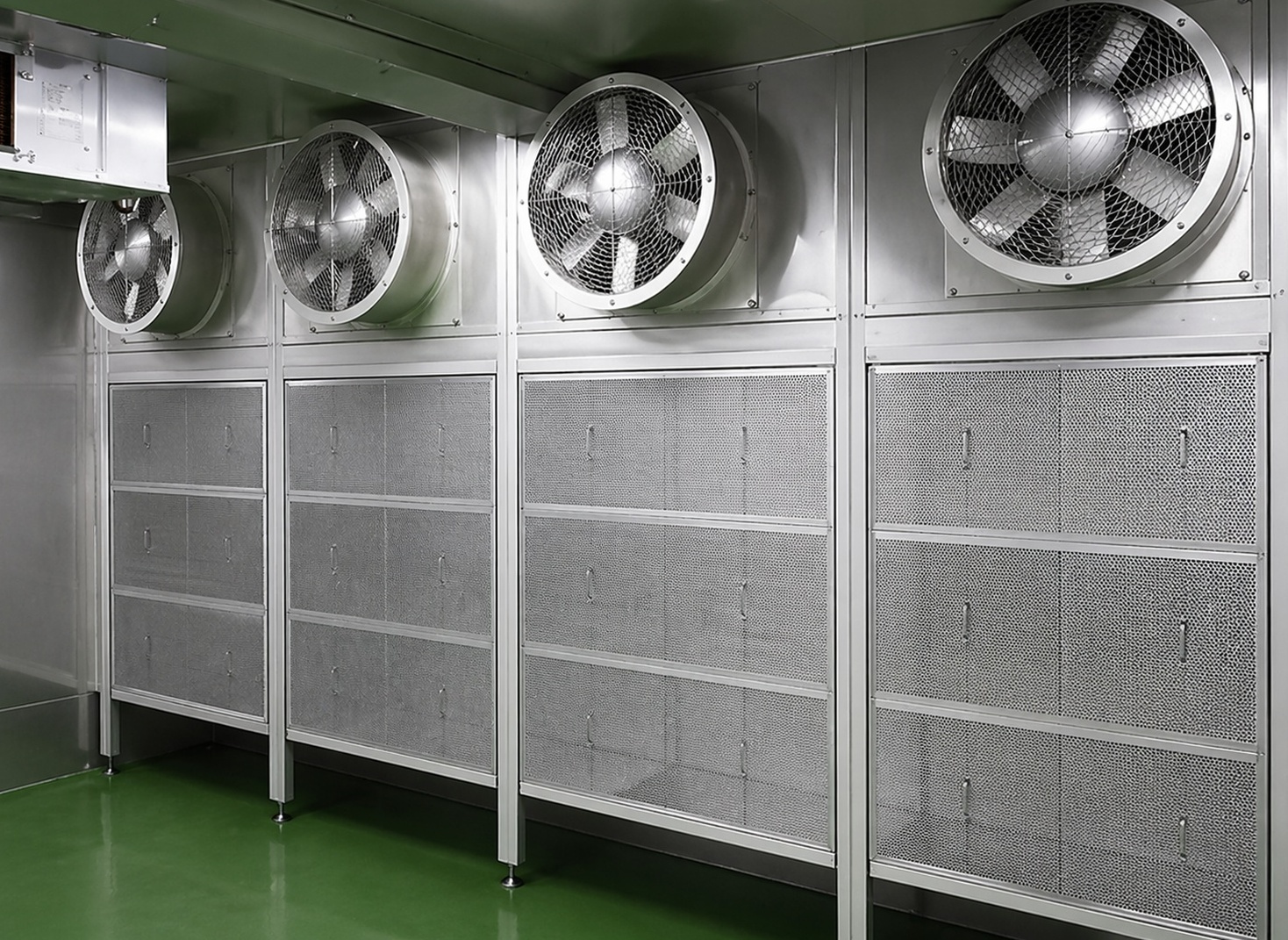
Fusion for industrial operation is presented as an expandable thawing cart system, designed to grow according to the scale of the project. The range includes configurations such as BF-3215 1U2C, with 2 carts and an approximate capacity of 250 kg per cycle; BF-3215 1U4C, with 4 carts and an approximate capacity of 500 kg per cycle; BF-3229 1U8C, with 8 carts and an approximate capacity of 1,000 kg per cycle; and BF-3243, with 12 carts and an approximate capacity of 1,500 kg per cycle. Actual capacity depends on the density, format, and thickness of the product.
The technology incorporates steam circulation control to favor uniform thawing, as well as a refrigeration function that automatically activates "Refrigerate" mode when the process ends. In addition, the surface temperature during thawing can be regulated through the most suitable program according to the type of product.
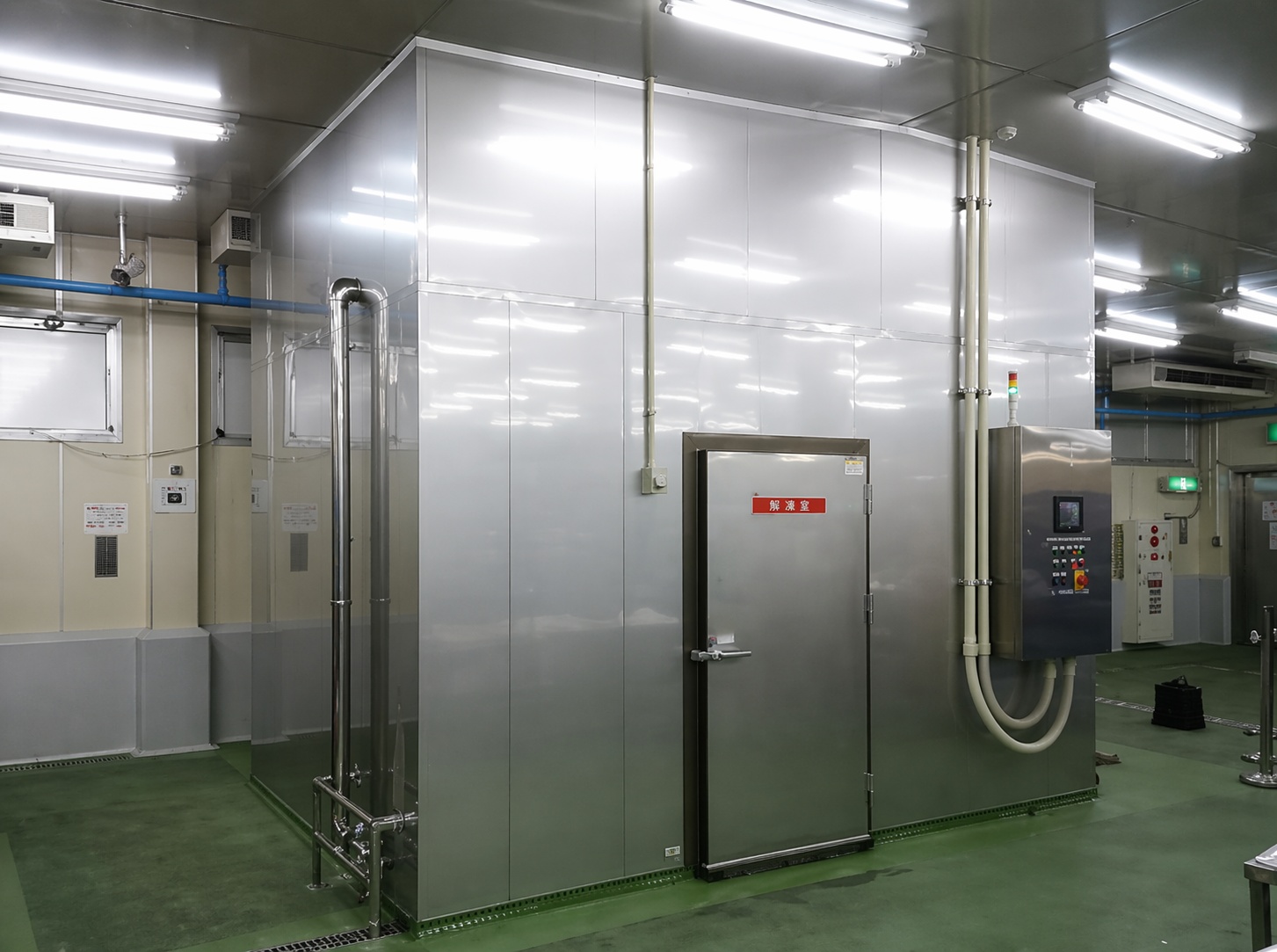
System Characteristics
- • Low-temperature steam thawing method.
- • Industrial carts adapted to the project configuration.
- • Trays: 16 trays per cart.
- • Tray dimensions: 600 × 600 mm.
- • Configuration: insulation panel + low-temperature air and steam mixing mechanism + refrigeration unit + control panel.
- • 4-type temperature controller, timer switching with 4-phase thawing program: 1. Frozen storage 2. Thawing phase 1 3. Thawing phase 2 4. Refrigerated storage
- • Includes condensing unit. Includes steam piping and control. Includes refrigeration unit.
- • Requires a dry steam generation unit in addition to the main unit.
- • Thawing time depends on the type of food, weight, packaging, etc.
Available capacities according to number of carts
Capacity can be expanded by project according to the number of carts, the product, and the real operating conditions.
Operational impact
Results and Operational Advantages
Fusion's difference is not limited to better thawing. It translates into a more agile operation, less exposed to waste, with lower resource consumption and a much greater ability to integrate thawing into the real rhythm of the business.
Faster process speed
Documented cases report thawing time reductions between 50% and 85%, integrating the process much more fluidly into the production line.
Less dripping and less waste
Fusion can reduce dripping by up to 70%, improving product yield and reducing relevant economic losses.
Lower energy and operating consumption
Compared with traditional methods, documented cases show savings between 30% and 50% in energy consumption and operating costs.
Fast return on investment
The analyzed cases estimate returns on investment between 10 and 18 months, driven by savings in waste, labor, water, cycle time, and improvement of the final product.
When thawing stops being an uncertain wait and becomes a precise stage of the process, the operation enters another level.
Fusion makes it possible to integrate speed, consistency, and control at a point where many companies still lose time, energy, product, and margin without fully realizing it.
That is where a well-integrated technology stops being only a technical improvement and begins to become a real operational advantage.
Let's begin the conversation